
 Trusted by 50,000 Customers
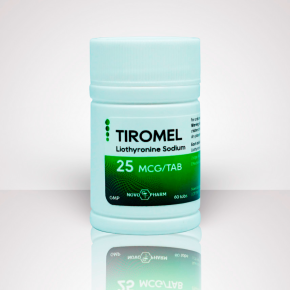
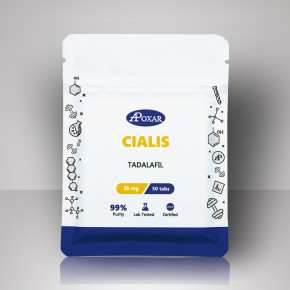

Cialis (Tadalafil) creates extreme muscle pumps and vascularity. With it, you can look significantly more muscular and deliver a better performance in the gym and on stage.
Key Information
Below is a straightforward, mechanics-focused summary of Tadalafil — how it works, what it does, and what that means for you in practice.
|
Parameter |
Key Information |
|
Primary Use |
Treatment of erectile dysfunction (ED) and BPH. |
|
Mechanism of Action |
PDE5 inhibitor. Increases cGMP, leading to smooth muscle relaxation and vasodilation. |
|
Defining Feature |
Long half-life (~17.5 hours). Effects can last up to 36 hours. |
|
Bodybuilding Application |
Used off-label to enhance muscle pumps, vascularity, and potentially nutrient delivery via increased blood flow. |
|
Effect on Hormones |
Does not aromatize (convert to estrogen) and has no androgenic activity. |
|
Common Athletic Dose |
5 mg, typically taken daily or pre-workout. Far lower than ED treatment doses. |
|
Important Note |
Not a muscle-building agent. Provides a temporary performance and aesthetic effect. |
What Is Cialis Tadalafil: mechanism of action & half-life
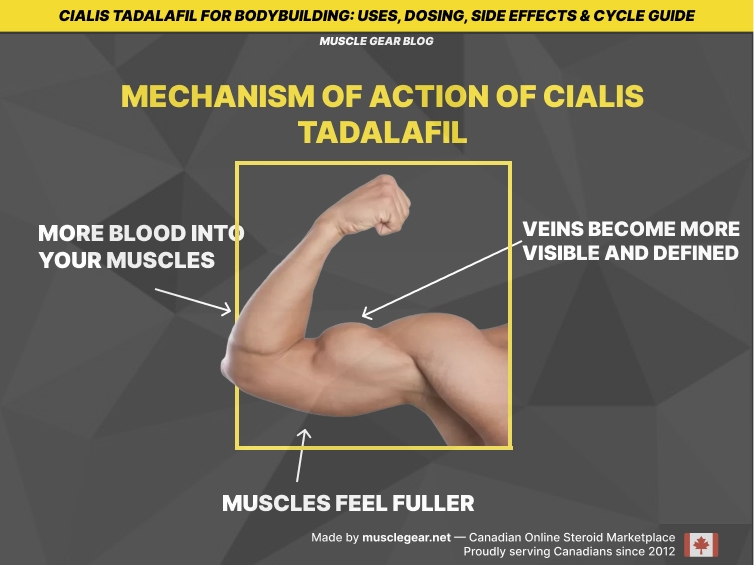
Cialis is the brand name for the drug Tadalafil. Doctors prescribe it to treat erectile dysfunction by relaxing blood vessels to improve blood flow. Bodybuilders use it for the same mechanical effect: it forces significantly more blood into your muscles. For you, this means two tangible, physical changes:
- Extreme muscle pumps during your workout — muscles feel fuller, tighter, and more engorged.
- Pronounced vascularity — veins become more visible and defined, both in and out of the gym.
Tadalafil enhances the delivery system and creates a temporary state of superior blood flow. It improves the look and "feel" of your muscles.
Why bodybuilders use Tadalafil
Tadalafil takes your natural muscle pump and turns it up to the maximum. It doesn’t build new muscle, but it supercharges the delivery system. On a chemical level, here’s how it works:
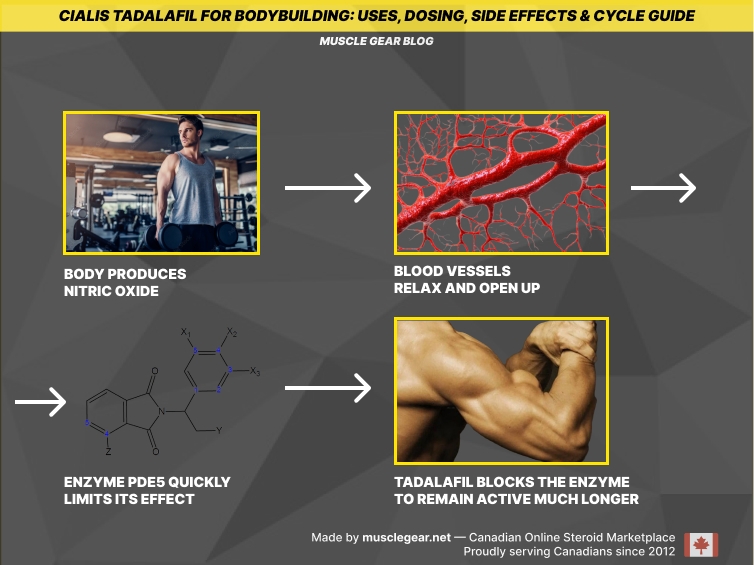
- when you train, your body produces Nitric Oxide (NO), which signals your blood vessels to relax and open up, creating a pump;
- an enzyme called PDE5 quickly breaks down this signal, limiting its effect;
- Tadalafil blocks this enzyme and disables the "off switch," allowing the vasodilation signal to remain active much longer.
The result is sustained, powerful dilation of blood vessels. It forces a massive amount of blood, oxygen, and nutrients into your muscle tissue far beyond the natural limit.
Long-lasting half-life of Tadalafil
The half-life of Tadalafil is about 17.5 hours. This means its effects can last up to 36 hours.
For you it means that a single small dose (like 5-10 mg) doesn't just work for one workout. It keeps working, providing extreme pumps, better nutrient flow, and sharp vascularity for your next training session and throughout the following day.
Effects on performance, pumps, and recovery
Tadalafil's main job is to open up your blood vessels, which boosts your blood flow. For you, this means three big things: a crazy pump while you train, veins that pop all day, and a little extra help with recovery after you're done.
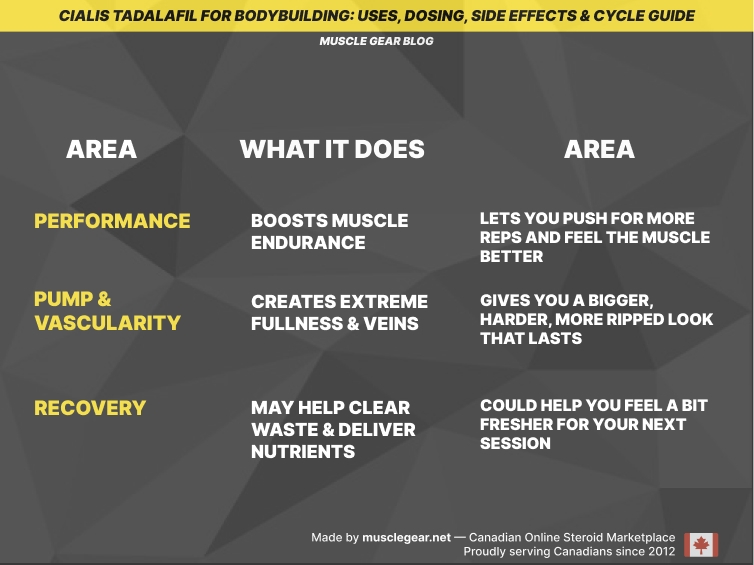
Performance
Tadalafil helps your muscle endurance. By getting more oxygen to your muscles during sets, you can often squeeze out 1-2 extra reps before you hit failure. It also makes that mind-muscle connection sharper, so you can really feel the muscle you're working.
Pump & vascularity
Tadalafil creates a huge, long-lasting pump that makes your muscles look bigger, harder, and more full. Since it works for up to 36 hours, that pumped-up, vascular look stays with you, which is perfect for the final days before a competition or a photoshoot.
Recovery
The better blood flow can help clear out waste products like lactic acid a bit faster after your workout. It might also help shuttle more nutrients to your muscles for repair. But remember, this is just a small bonus, so it doesn't replace eating right and getting your sleep. You still have to nail the basics.
Side effects and risks for athletes
Most side effects are mild, but some are serious, and you need to know the difference before you consider using it.
When you first start, your body might react with some temporary, annoying symptoms. These are usually not dangerous and often fade as your system adjusts. The most frequent ones include:
- headaches and dizziness;
- indigestion or an upset stomach;
- muscle aches or back pain;
- flushing (redness in your face or chest).
This is the most critical risk is Priapism. It is a prolonged, often painful erection that lasts more than 4 hours without sexual stimulation. And this is a medical emergency.
If it happens, you must seek immediate help. If you ignore it, it can cause permanent damage to the tissues in your penis and lead to long-term erectile dysfunction. While rare, this risk is real and is the main reason Tadalafil is a controlled prescription drug, not a harmless supplement.
How to cycle Tadalafil
You cycle it strategically based on your goal; either for a short-term peak look or for consistent training enhancement. Your dosing and timing will be completely different for each approach.
The short cycle for competition peak week
This protocol is all about maximizing your look on stage. You start low and build up to ensure maximum fullness and dryness without side effects. The goal is to achieve extreme vascularity, skin-tight fullness, and that grainy, hard look. So you should stop immediately after the show.
|
Timing |
Typical protocol |
|
Start 7-10 days out from your competition. |
Days 1-3: 5 mg per day. Days 4-7: 10 mg per day. The competition day: Often, a final 10 mg dose is taken (split, e.g., 10mg morning and 10mg a few hours before stepping on stage). |
The low-dose cycle for daily use
This cycle is for improving your everyday pumps and potential recovery support, not for a dramatic peak. The key is a consistent, low dose. The goal is to maintain elevated pumps, better nutrient delivery, and improved vascularity across all your workouts. It's a subtle, sustained enhancement, not a drastic change.
|
Timing |
Typical protocol |
|
Used in blocks of 4-8 weeks, followed by an equal break to reset receptor sensitivity. |
A steady dose of 5-10 mg per day, usually taken in the morning. 5mg is often sufficient for daily training benefits. |
FAQ
Does Tadalafil build muscle?
No. Tadalafil is a vasodilator, not an anabolic. It increases blood flow to make your muscles look fuller and more vascular, but it doesn't directly stimulate muscle protein synthesis or growth.
Can I take Tadalafil with my pre-workout?
You need to be very careful. Many pre-workouts contain stimulants (like caffeine) that also affect blood pressure. Combining them with Tadalafil can increase the risk of headaches, dizziness, or a dangerous drop in blood pressure. It's safest to avoid strong stimulants when using Tadalafil.
How long before I see the pump effect?
You'll typically feel the peak effect for pumps and vascularity about 2-4 hours after taking it. Because of its long half-life, the enhanced look can then last well into the next day.
Does Tadalafil affect my heart or blood pressure?
Yes, that's its main mechanism. It lowers blood pressure by relaxing blood vessels. This is why it's dangerous for people with heart conditions or who take nitrates. As an athlete, you should monitor your blood pressure, especially when starting.
Will it show up on a drug test?
Standard workplace or athletic drug tests do not screen for PDE5 inhibitors like Tadalafil. However, it is banned in some competitive sports (like powerlifting under the IPF) because it may enhance performance. Always check the specific anti-doping rules of your federation.
Conclusion
Tadalafil is a tool for enhancing your look, not your long-term growth. It gives you temporary but powerful effects: bigger pumps, more veins, and a harder appearance, thanks to its 36-hour duration.
Use it with a clear purpose, either a short blast before a show or a low daily dose for training, and always respect the risks. It's effective for its specific job, but it's not essential and should never replace the fundamentals of diet, training, and recovery.